
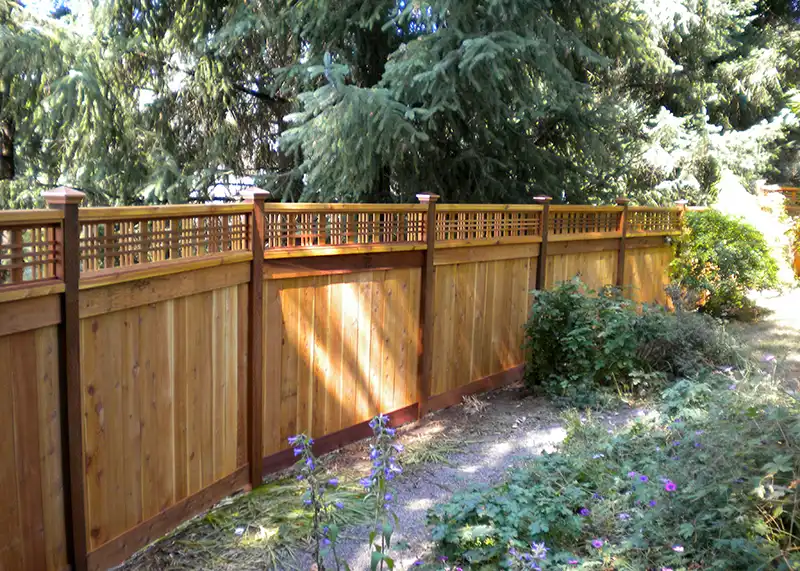


Replacing a fence between two neighboring properties can sound simple. The old fence is worn out, both homeowners would like a new one, and now it’s time to call a contractor.
But agreeing that a fence needs to be replaced is not the same as agreeing on the details of the project.
Where will the new fence go? What will each side look like? Who is paying for which parts? Are there trees, shrubs, storage sheds, or other obstacles along the fence line? And perhaps most importantly, has everyone who shares that boundary actually been told what is about to happen?
At Steadfast Fencing, Decking and Construction, we’ve found that shared fence projects tend to go more smoothly when you discuss these questions before the old fence comes down.
Talk to Your Neighbor Before the Old Fence Comes Down
We’ve arrived at projects to begin removing an existing fence only to have the adjoining homeowner come outside and say they didn’t know the fence was being replaced. That’s a difficult way for everyone to start a project. If you hired the fencing contractor, your contractor may have no relationship with your neighbor.
They may not have the neighbor's contact information and may have only discussed the project with you. The conversation about replacing a fence should happen between both homeowners before construction begins.
That conversation doesn't need to be complicated. Start with the basics:
Hi, Neighbor…
Agree on Where the Fence Is Going
The fence location is one of the biggest sources of confusion we encounter.
An existing fence may look like an obvious property boundary, especially if it has been there for decades. But an old fence tells you where someone built a fence. It does not necessarily tell you where the legal property line is.
That distinction can be especially important in older Portland neighborhoods. A fence may have been installed 40 or 50 years ago, and neither current homeowner may know why that particular location was chosen.
If both homeowners are comfortable with the existing fence location, replacing the fence in that same general location may be the simplest practical approach. But if the exact boundary matters, do not rely on the old fence alone.
Sometimes existing property markers can provide useful information. These may include metal pins or rods in the ground, which homeowners can sometimes locate with a metal detector. Finding what appears to be a marker, however, is not the same as professionally establishing a legal boundary.
Determining Property Lines
The City of Portland notes that property lines between neighboring lots can be difficult to locate and that a professional surveyor may be needed to determine the exact boundary.
Choose a Fence That Works From Both Yards
Once the location is understood, the next question is what each homeowner will actually see.
Traditional fence construction can create an obvious finished side and a side where more of the rails or structural components are visible. That can become an awkward issue when two neighbors are contributing to the same fence. Fortunately, there are designs that work well from both properties. This is one reason we recommend thinking about a shared fence as part of two outdoor spaces, not simply as a boundary separating them.

Good Neighbor Fencing
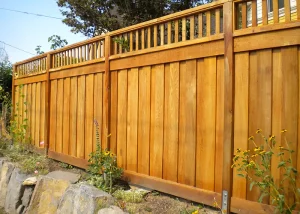
Picture Frame Fencing
Agree on the Base Fence Before You Discuss Upgrades
Cost sharing can seem like another potential complication, but it doesn’t necessarily have to be.
One approach we see work well is to first establish the base fence both homeowners agree on. For example, the neighbors might agree on the location, height, basic cedar design, and overall scope. They can then decide between themselves how they want to share that base cost.
What happens if one homeowner wants something extra? Maybe one neighbor wants upgraded trim, a more elaborate finish, or a custom gate. That doesn’t necessarily require redesigning the entire agreement. The homeowner requesting the upgrade can simply pay the additional cost associated with that feature.
Fair doesn’t mean every feature or every dollar has to match. The more important goal is for both homeowners to understand what the shared project includes and what any optional additions will cost.
Clear the Fence Line and Work Out the Details
Once the neighbors agree on the fence itself, take a look at what’s physically surrounding it.
Some of the biggest complications during fence replacement are not the fence at all. They are everything that has accumulated beside it over the years.
We commonly encounter:
These conditions can make removing the existing fence more difficult and can interfere with access for new post placement and construction.
You don’t necessarily need to clear everything before requesting an estimate. In fact, it can be useful for us to see the existing conditions first. But identify anything that may need to be moved, trimmed, detached, or otherwise addressed before work begins.
Think About Gates Early Too
A gate is a relatively small part of a fence, but it receives far more movement than the fence panels around it. A gate can match the surrounding fence or introduce a subtle design variation. On a basic fence, Ben often likes a rounded or arched top because it adds visual interest to an otherwise level fence line while keeping the gate relatively lightweight.
How the gate is framed matters too. Steadfast uses Z-frame construction to help support the gate and maintain stability over time. If a custom or upgraded gate primarily benefits one homeowner, the neighbors can consider it separately from the shared base fence when discussing cost.

Protect the Shared Investment After the Fence Is Built
Good shared-fence planning does not end when construction is complete. How each household treats the fence line afterward can affect how the fence performs over time.
Living in the Portland area, homeowners naturally think about rain when they think about wood fence longevity. In our experience, however, one of the most avoidable problems happens much closer to the ground.
We frequently see soil, bark dust, and other landscaping material piled around the bottom of fence posts. Those materials can retain moisture directly against the post. Over time, that can contribute to deterioration near the base, which is where we commonly see structural fence failures develop.
A simple habit can help: avoid building up moisture-holding soil, mulch, or bark dust around your fence posts. On a shared fence line, it helps both homeowners understand that conditions on either side can affect the same structure.
What About Sealing Cedar?
A sealer can help preserve cedar’s original color and appearance. Left unfinished, cedar naturally weathers and changes color over time.
We distinguish that appearance decision from the structural health of the fence. Applying a finish does not eliminate the need to protect the post area from prolonged moisture exposure. If you like cedar’s natural weathered-gray appearance, maintaining the original wood color may not be a priority.
A Better Shared Fence Starts With Three Steps
A sealer can help preserve cedar’s original color and appearance. Left unfinished, cedar naturally weathers and changes color over time.
We distinguish that appearance decision from the structural health of the fence. Applying a finish does not eliminate the need to protect the post area from prolonged moisture exposure. If you like cedar’s natural weathered-gray appearance, maintaining the original wood color may not be a priority.
1. Talk to your neighbor.
Make sure they know what you are proposing before the old fence starts coming down.
2. Agree on the style and expectations.
Both homeowners should understand what is being built, what each side will look like, and what they are receiving for the agreed price.
3. Agree on the location.
Do not leave uncertainty about where the replacement fence is intended to go.
You don’t need every construction detail figured out before contacting Steadfast. That’s where an experienced fence contractor can help.
Once you and your neighbor have started the conversation, we can help you compare fence styles, understand how different designs will look from each property, identify site or access considerations, and develop a clear estimate.
If you’re considering a new or replacement fence in the Portland Metro area, contact Steadfast Fencing, Decking & Construction to discuss your project and request a free estimate.
Portland Metro Area
Planning A Shared Fence?
(971) 404-7609
Request A Free Estimate
Related Insights

The Most Important Parts of Your Deck Are Those You Cannot See
September 22, 2026A well-built deck is a complete structural system. The decking boards are only the surface. Below them are footings, posts,…